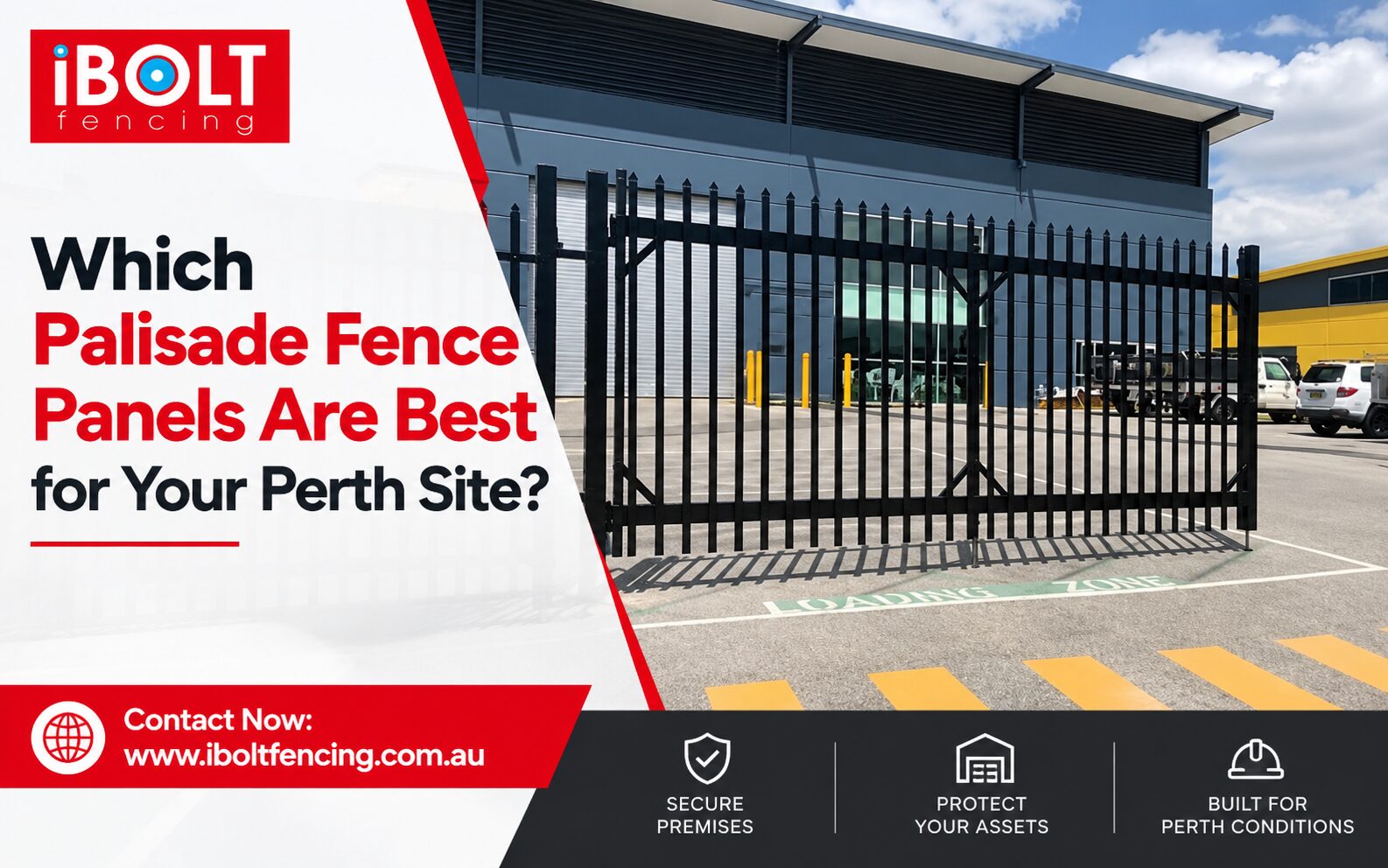
Choosing a perimeter fence is not simply a matter of selecting the tallest option available. The right fence needs to suit the site’s security requirements, layout, access points, exposure and day-to-day operations. For commercial and industrial properties in Perth, palisade fence panels can provide a strong physical boundary while maintaining visibility through the perimeter.
However, not every palisade system is configured in the same way. Panel height, pale profile, top design, finish and overall specification can influence how suitable the fence is for a particular property. Understanding these differences can help businesses choose a system based on actual site requirements rather than appearance alone.
What Are Palisade Fence Panels?
Palisade fence panels are sections of metal fencing constructed using vertical steel pales secured to horizontal rails and supported by posts. Unlike solid fencing, the spaces between the pales allow visibility through the boundary while still creating a substantial physical barrier.
This combination can make palisade fencing particularly useful around commercial, industrial and infrastructure sites where perimeter security and visibility are both important.
A typical system may include:
- Vertical steel pales
- Horizontal rails
- Supporting posts
- Security fixings
- Pointed or alternative pale tops
- Pedestrian or vehicle gates
- Galvanised or coated finishes
The exact configuration should be selected according to the site rather than applying one standard specification everywhere.
What Are the Common Palisade Fence Panel Heights?
Height is one of the first considerations when planning a palisade fence.
A lower fence may be suitable where the main objective is clearly defining a boundary and discouraging casual entry. Sites with greater security concerns may require a taller system to create a more substantial perimeter obstacle.
Common requirements can vary from approximately 1.8 meters through to taller security-focused configurations, depending on the project and applicable requirements.
How Do You Choose the Right Height?
Consider questions such as:
- What level of security does the site require?
- What assets are stored inside the property?
- Is the area accessible to the general public?
- Are there vulnerable points around the boundary?
- Will gates need to match the fence height?
- Are there planning, operational or site-specific requirements?
A warehouse containing valuable stock, for example, may have different perimeter requirements from a commercial property primarily looking to establish a clear boundary.
Rather than choosing height independently, it should form part of the overall security assessment.
W-Section vs V-Section Palisade Fencing
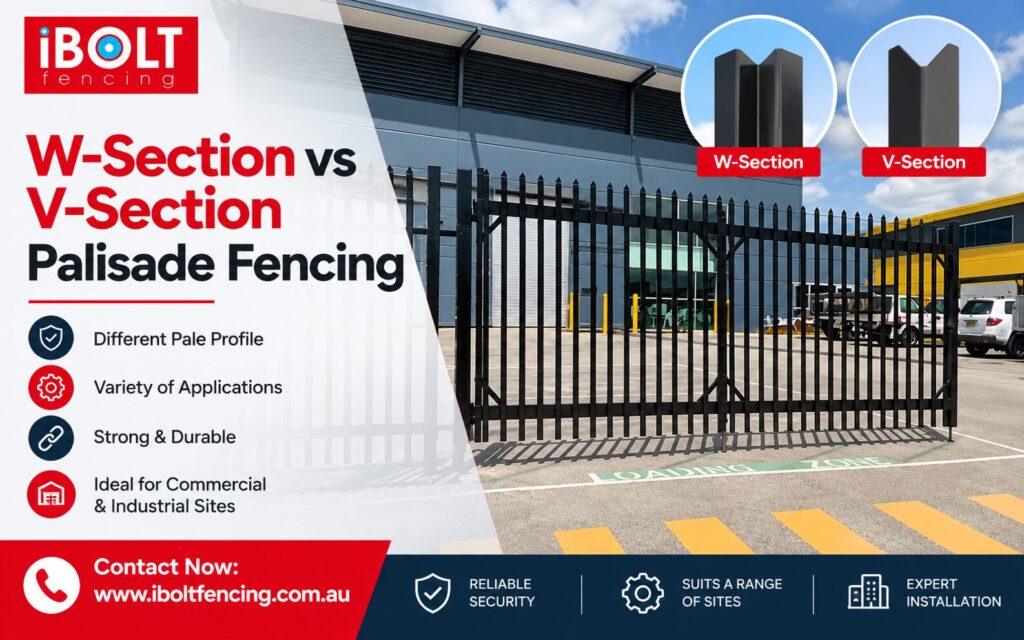
The profile of the steel pales is another important consideration. W-section and V-section pales are commonly associated with palisade systems, but their shape and application can differ.
W-Section Palisade
W-section pales have a folded profile that creates additional rigidity. They are commonly considered for sites where a more robust perimeter barrier is required.
Potential applications can include:
- Industrial facilities
- Warehouses
- Utility sites
- Storage yards
- Infrastructure compounds
- Higher-security commercial properties
V-Section Palisade
V-section pales have a different folded profile and can suit a variety of commercial and industrial perimeter applications.
The appropriate choice should not be based on the profile name alone. Fence height, pale thickness, fixings, posts, rails and gates all contribute to the performance of the complete system.
For businesses considering palisade fencing, assessing the whole perimeter specification is more useful than comparing a single component in isolation.
Pale Profiles and Top Options
The vertical pale is one of the defining components of a palisade fence, but the profile is only part of the decision.
The top of each pale can also affect the appearance and deterrent characteristics of the fence.
Depending on the system and project requirements, different pale-top configurations may be available. Some create a more visibly security-focused perimeter, while others may be selected where a less aggressive appearance is preferred.
Consider the Surrounding Environment
A security fence around an industrial compound may have very different requirements from fencing near public pedestrian areas.
When selecting the pale and top design, consider:
- Site usage
- Public accessibility
- Required security level
- Surrounding properties
- Safety considerations
- Applicable standards or project requirements
The objective should be to create a practical perimeter rather than simply choosing the most imposing-looking option.
Galvanised vs Powder-Coated Finishes
The finish applied to the fencing matters because the system will remain outdoors throughout its service life.
Galvanised Palisade Fencing
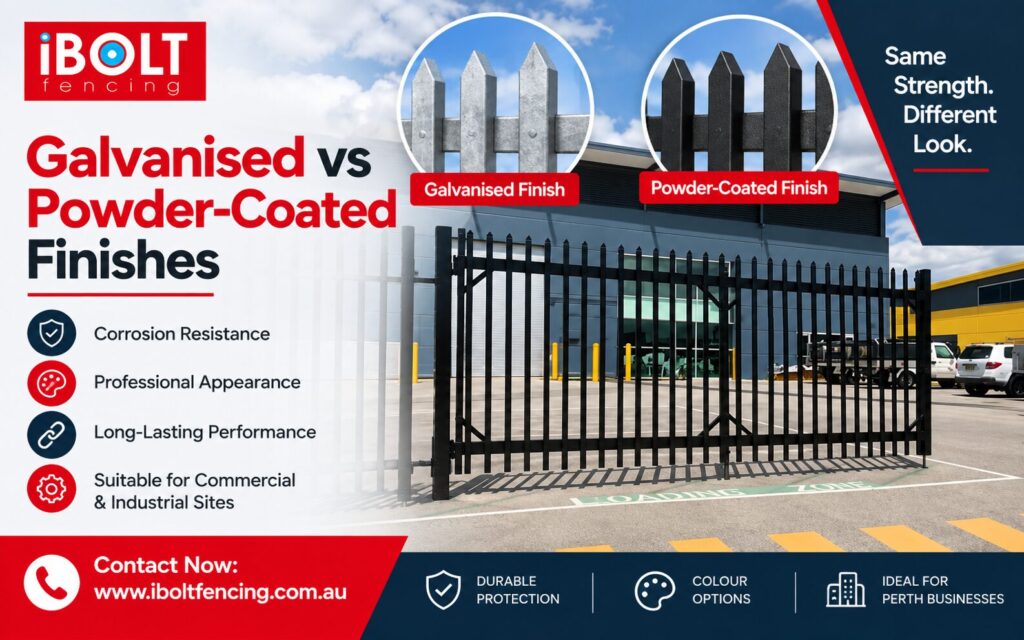
Galvanising provides steel with a protective zinc coating designed to help resist corrosion.
This practical finish is commonly considered for industrial and commercial fencing where durability and straightforward maintenance are important.
Powder-Coated Palisade Fencing
Powder coating can provide an additional decorative finish and allow the fence to better complement the property’s colour scheme or surrounding structures.
It can be useful where businesses want security fencing that also contributes to a consistent exterior appearance.
The right finish can depend on the environment, desired appearance, maintenance expectations and project specification.
How Does Panel Choice Affect Site Security?
No individual panel feature determines the security of an entire perimeter.
Effective palisade security fencing should be considered as a complete system. Panel height, pale strength, spacing, rails, posts, fixings and gates all need to work together.
For example, installing strong fence panels while leaving a poorly protected vehicle entrance may create an obvious weak point.
Businesses should consider the complete boundary, including:
- Vehicle access
- Pedestrian gates
- Corners
- Changes in ground level
- Areas hidden from normal activity
- Connections with existing structures
- Nearby objects that could affect the fence line
Visibility is another useful characteristic of palisade fencing. Because the system is not a solid wall, staff or security personnel can generally maintain sightlines through the perimeter.
Read More: Protecting Vehicles and Fleet Areas
Businesses storing vehicles, equipment or other assets outdoors may have additional perimeter considerations. Our guide explains how palisade fencing can form part of the security approach around these areas.
Read More: How Palisade Security Fencing Protects Your Fleet
Choosing Palisade Fence Panels for Different Perth Sites
The best panel specification depends heavily on what is being protected.
Warehouses and Distribution Facilities
Warehouses can have large boundaries, loading areas and multiple vehicle access points. The fence design should account for how trucks, staff and visitors move around the site.
Industrial Yards
Industrial yards may contain machinery, equipment, materials or vehicles. Here, durability and practical access arrangements can be particularly important.
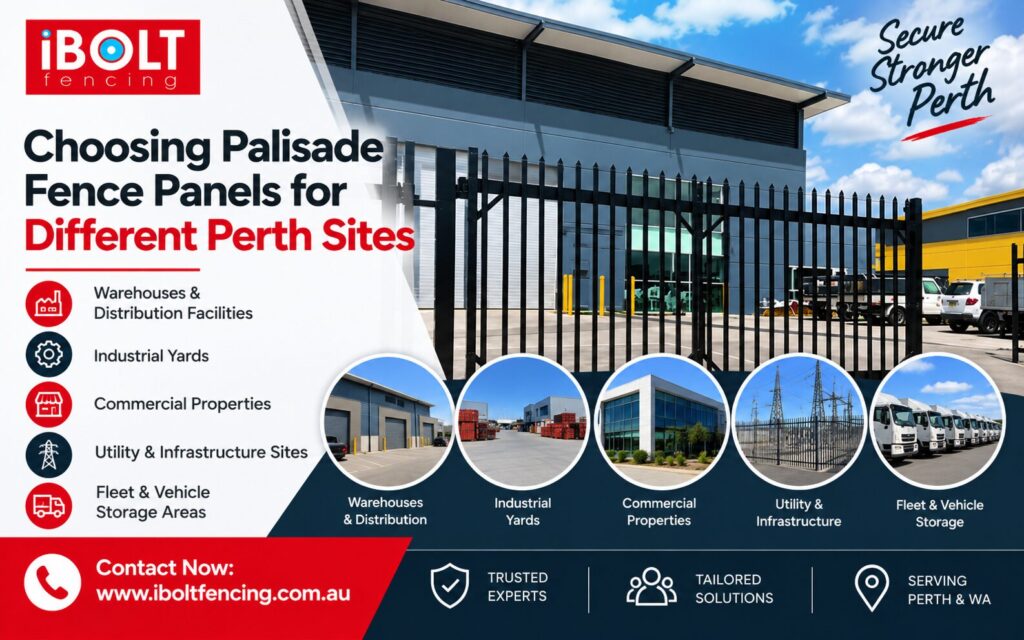
Commercial Properties
Some commercial sites need a secure boundary without creating a completely closed visual barrier. Palisade fencing can help retain visibility while clearly defining restricted areas.
Utility and Infrastructure Sites
Sites containing important equipment may require more carefully specified perimeter protection. Height, pale profile, access control and gate arrangements should be considered together.
Fleet and Vehicle Storage Areas
For vehicle yards, perimeter fencing needs to work alongside entry and exit points. Gate design can therefore be just as important as the panels themselves.
When Is Custom Sizing Required?
Standard fencing configurations will not suit every Perth property.
A site may require a customised solution because of its dimensions, ground conditions, security objectives or existing infrastructure.
Customisation may be appropriate where there are:
- Uneven or sloping boundaries
- Unusual fence-line dimensions
- Existing walls or structures
- Wide vehicle entrances
- Specific gate requirements
- Different security zones within one property
- Operational access requirements
A site inspection can help identify these conditions before the fence specification is finalised.
Custom sizing can also help avoid unnecessary gaps and awkward transitions where new fencing connects with existing perimeter structures.
Why Choose iBOLT Fencing?
iBOLT Fencing provides commercial and industrial fencing solutions for projects across Perth and Western Australia. Rather than treating every boundary in the same way, the fencing specification can be considered in relation to the property’s layout, access requirements and intended security function.
Businesses looking at palisade security fencing can discuss suitable panel configurations, heights, profiles, finishes and gate requirements with the iBOLT Fencing team.
Working with an experienced fencing company is particularly valuable when a project involves unusual boundaries, commercial access points or a combination of fencing and gates.
Frequently Asked Questions
What height should palisade fence panels be?
There is no single height that is suitable for every property. The appropriate height depends on the site’s purpose, security requirements, location, access arrangements and applicable project requirements. A site assessment can help determine a suitable specification.
Are palisade fence panels suitable for commercial properties?
Yes. Palisade systems can be considered for warehouses, industrial yards, commercial premises, infrastructure facilities and other properties requiring a clearly defined and robust perimeter.
What is the difference between W-section and V-section palisade fencing?
The terms refer to the shape or profile of the vertical steel pales. W-section pales have a folded W-shaped profile, while V-section pales use a V-shaped profile. The appropriate option depends on the required fence specification and site application.
Is galvanised or powder-coated palisade fencing better?
Neither finish is automatically right for every project. Galvanising is commonly selected for corrosion protection and practical durability, while powder coating can provide an additional decorative finish. Environmental conditions and appearance requirements should be considered.
Can palisade fencing be installed on uneven ground?
Many sites with slopes or changing ground levels can still accommodate palisade fencing, but the layout may require additional planning or customised sections. The boundary should be assessed before the final panel configuration is selected.
Can palisade fencing include vehicle and pedestrian gates?
Yes. Gates can be incorporated into the perimeter design according to the site’s access requirements. Their dimensions, positioning and operation should be considered together with the surrounding fence.
Choose Panels Around the Site, Not Just the Fence
The best palisade fence panels for a Perth site are those selected around the property’s actual security and operational requirements.
Height is important, but it is only one part of the decision. Pale profile, top configuration, finish, posts, fixings, gates and ground conditions can all influence the final fencing system.
For that reason, businesses planning a new perimeter should first consider what they need the fence to achieve. A well-planned system can combine visibility, durability, access and physical perimeter protection without relying on a one-size-fits-all specification.
For commercial and industrial properties across Perth, iBOLT Fencing can help assess the site and determine a suitable palisade fencing configuration for the boundary, gates and access requirements.