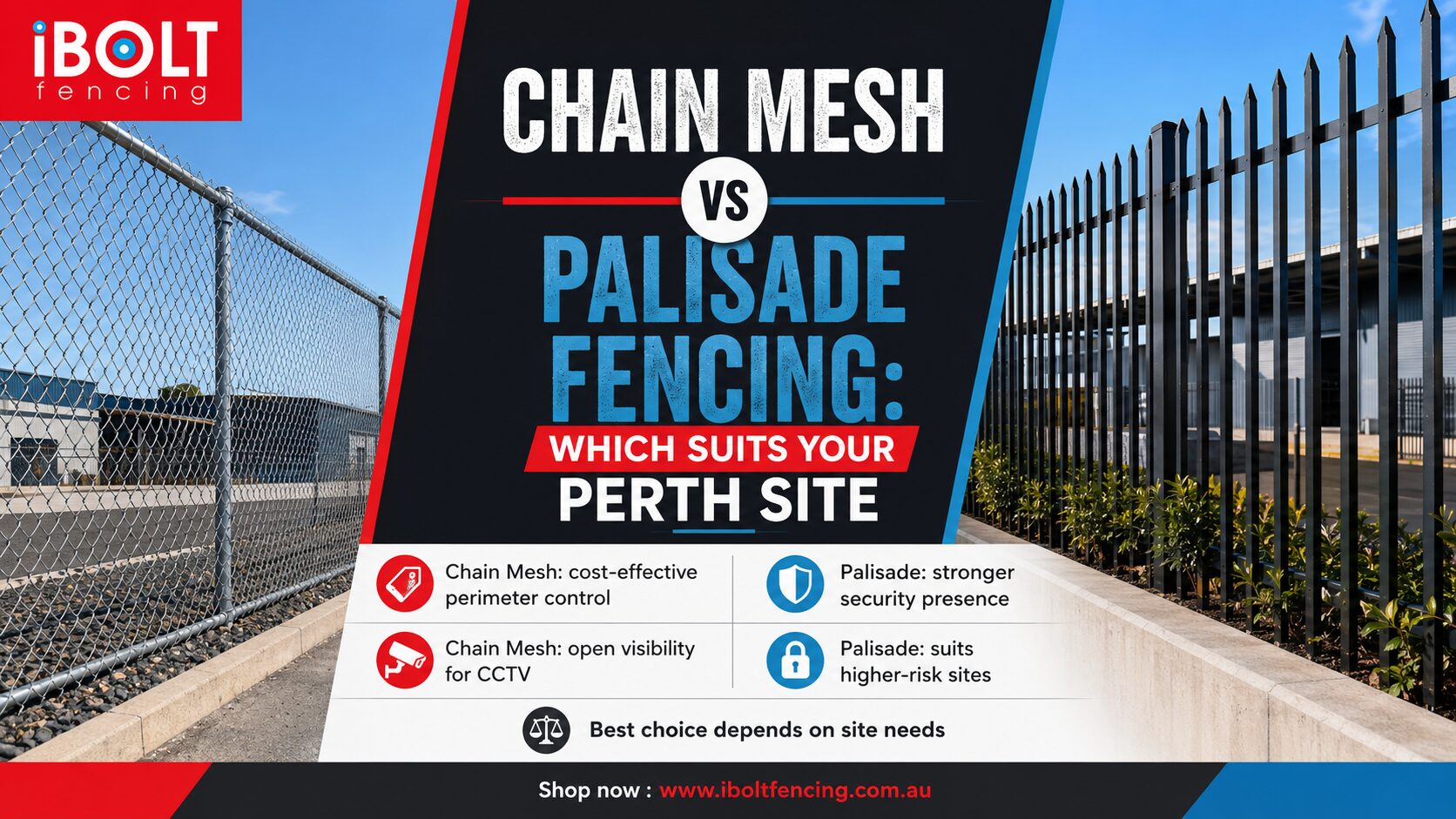
Choosing the right perimeter fencing is an important decision for any commercial, industrial, school or infrastructure site. The fence needs to match the required security level, boundary size, visibility needs, access points and budget. Two common options for Perth properties are chain mesh fencing and palisade fencing, but each serves different priorities.
Chain mesh is often selected for long perimeters where visibility, flexibility and value matter. Palisade fencing is generally preferred where a stronger visual deterrent and a more substantial steel barrier are required. Understanding the differences can help you choose a system that suits the actual risks and daily operation of your site.
What Is Chain Mesh Fencing?
Chain mesh fencing uses woven steel wire supported by posts, rails and tensioning components to create a continuous boundary. It is commonly used around warehouses, factories, schools, sports facilities, yards and construction areas because it can cover long distances efficiently while maintaining open sightlines.
Common Advantages of Chain Mesh
Chain mesh can offer:
- Clear visibility through the fence line
- Practical coverage for long boundaries
- Flexible height and configuration options
- Compatibility with pedestrian and vehicle gates
- Straightforward repair of damaged sections
- Galvanised or coated finish options
For sites where staff need to see through the boundary or CCTV views should remain open, the mesh construction can be especially useful.
What Is Palisade Fencing?
Palisade fencing is built from vertical steel pales secured to horizontal rails and supporting posts. Its rigid construction creates a substantial perimeter barrier and a strong security presence. It is often considered for industrial facilities, warehouses, utility areas and commercial premises where unauthorised access is a greater concern.
Key Advantages of Palisade Fencing
Palisade systems are often chosen for:
- Strong steel perimeter protection
- Greater resistance to climbing and interference
- A highly visible security presence
- Long-term durability
- A professional industrial appearance
Different profiles, heights and finishes can be considered depending on the site and required security level.
Chain Mesh vs Palisade: Comparing Security
Security is one of the biggest differences between the two systems.
Chain mesh creates an effective physical boundary and can be enhanced with additional security features where required. It works well for general perimeter control, separating operational areas and discouraging casual access. However, its woven-wire construction is different from a rigid steel palisade barrier.
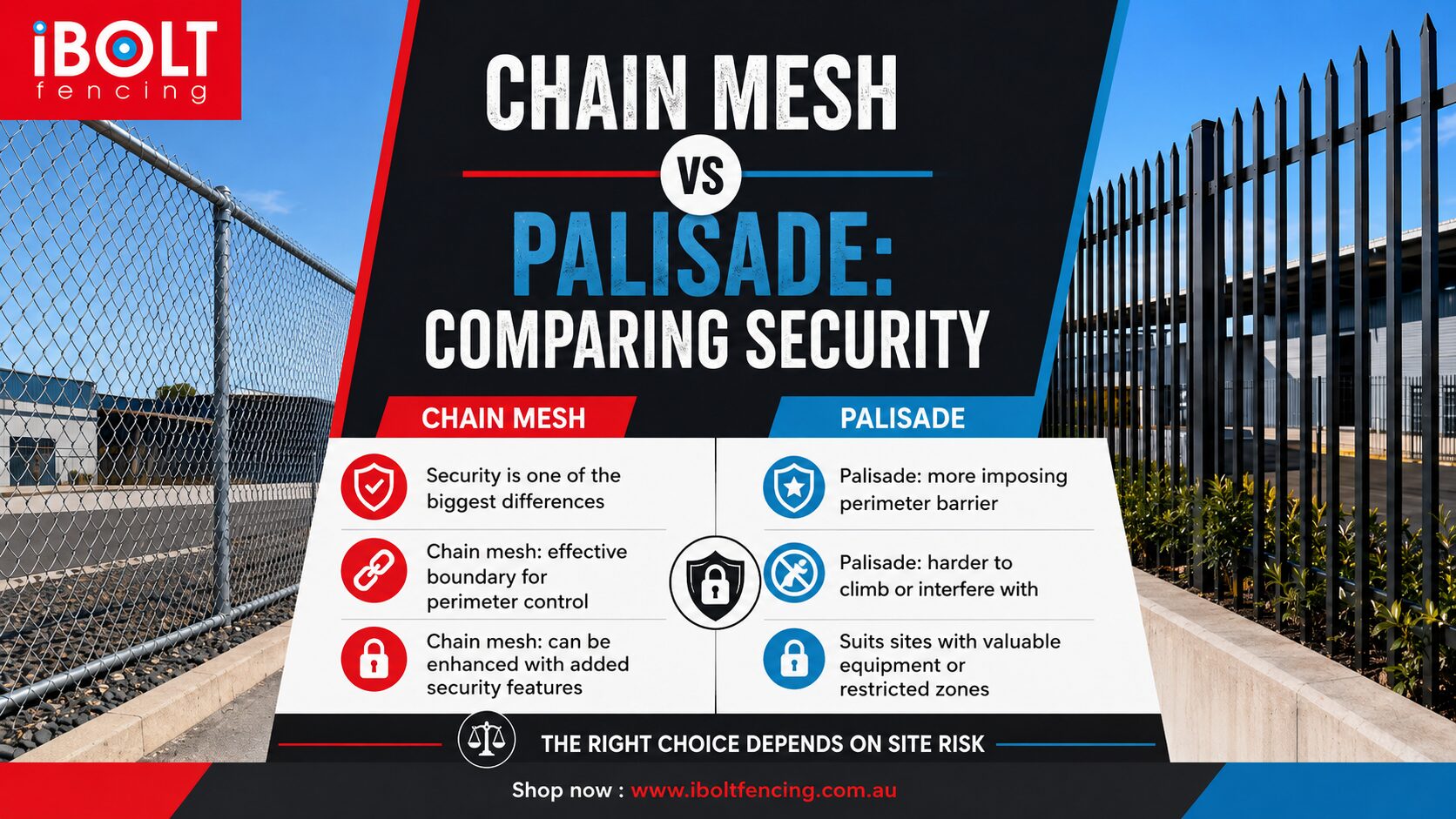
Palisade fencing creates a more imposing perimeter. The strength and shape of palisade fence panels can make the fence more difficult to climb or interfere with, depending on the selected specification. This makes palisade particularly relevant for properties containing valuable equipment, restricted zones or infrastructure that needs a higher level of protection.
The right choice should be based on site risk. A sports ground and an industrial compound may both require fencing, but their security priorities are unlikely to be identical.
Visibility and CCTV Considerations
Chain mesh is usually the better choice when visibility is a major priority. Its open pattern allows staff to monitor activity around the boundary and can help security cameras retain useful sightlines across entrances and perimeter zones.
Palisade fencing also allows visibility between the vertical pales, so it does not create the solid visual block of sheet fencing. However, the steel pales create a stronger security appearance.
For schools, sports facilities and some commercial sites, chain mesh may provide the more open feel. For industrial properties, palisade may better communicate that the perimeter is controlled and protected.
Cost and Long-Term Value
There is no single fencing option that is automatically cheaper for every project. Cost depends on fence height, total length, ground conditions, finish, gate requirements, security additions and installation complexity.
Chain mesh can be attractive for large sites because it provides efficient coverage over long runs. Palisade generally uses heavier steel components and may involve a higher initial investment. Where stronger perimeter protection is required, however, that extra cost may offer better value because the fencing specification is more closely matched to the risk.
Instead of comparing only the price per meter, consider the cost of achieving the security level your site actually needs.
Maintenance in Perth Conditions
Perth fencing may need to cope with strong sun, seasonal rain, wind and, in some areas, coastal exposure. Choosing the right finish and installation method is therefore important.
Both fencing systems can provide long service life when correctly specified and maintained. Routine inspections should check for loose fittings, impact damage, corrosion, gate alignment and changes around the ground line.
Which Fencing Works Best for Different Sites?
The intended use of the property is a useful starting point.
Chain Mesh May Suit:
- Sports grounds and courts
- Schools and education facilities
- Construction compounds
- Factory boundaries
- Storage yards
- Sites where CCTV visibility is important
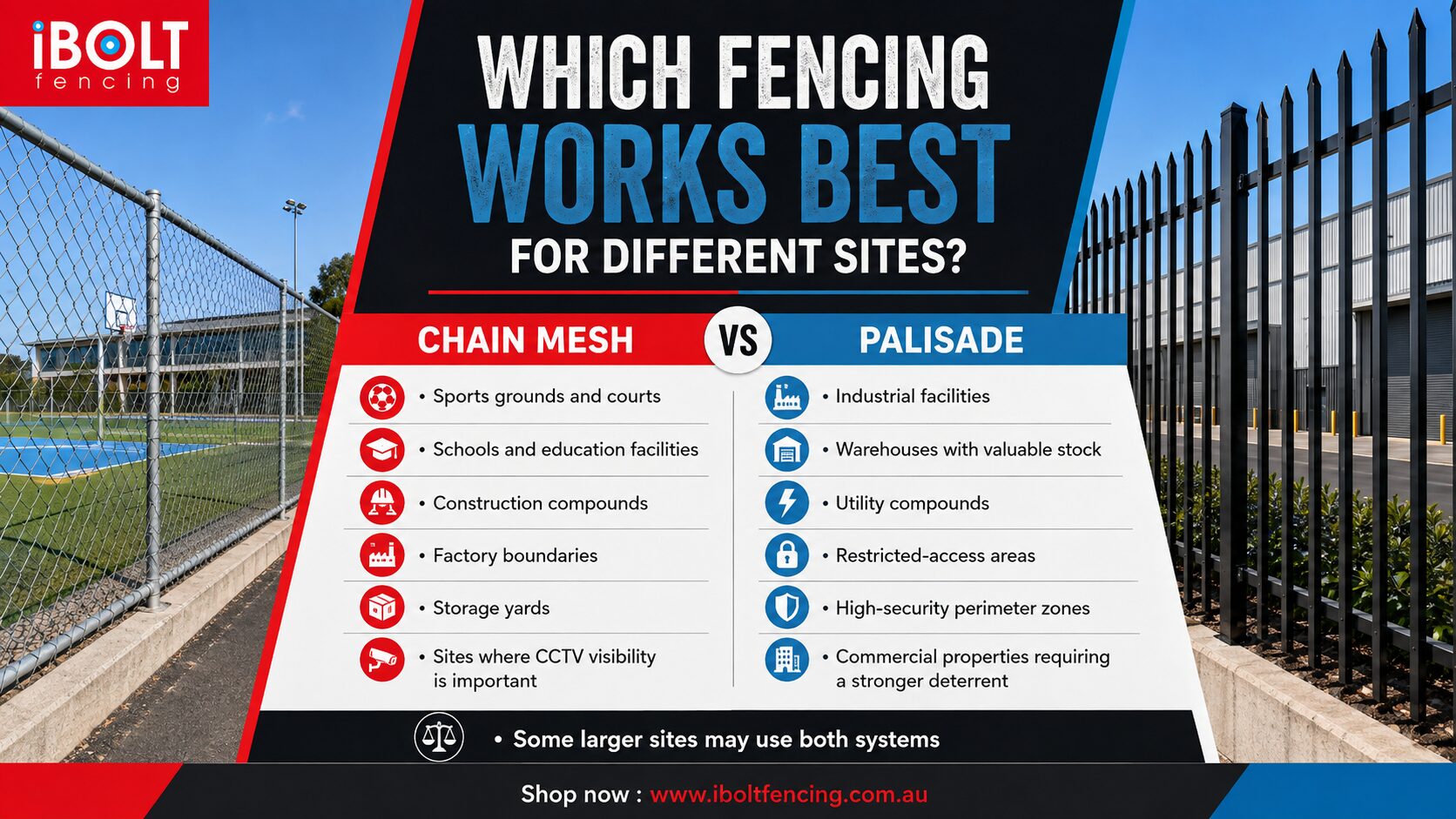
Palisade May Suit:
- Industrial facilities
- Warehouses with valuable stock
- Utility compounds
- Restricted-access areas
- High-security perimeter zones
- Commercial properties requiring a stronger deterrent
Some larger properties may use both systems. Palisade could protect a sensitive frontage or restricted zone, while chain mesh could be used along lower-risk sections of the boundary.
Gates, Access and Site Layout
A perimeter fence is only as practical as its access points. Vehicle gates, pedestrian entrances, loading zones and emergency access should be considered at the same time as the fence.
A warehouse may need wide vehicle access, while a school or sports facility may require several pedestrian entries. Site gradients, driveway width and frequency of use can all influence the final design.
Planning the fence and gates together helps create a more consistent perimeter and reduces the chance of inconvenient or vulnerable access points.
How to Choose the Right Fence for Your Site
Before deciding, ask:
- What level of security does the property need?
- How long is the perimeter?
- Is clear visibility important for staff or CCTV?
- Are high-value assets or restricted areas present?
- What gates and access points are required?
- Does appearance matter at the street frontage?
- What maintenance level is practical?
If the priority is practical perimeter control across a large area, chain mesh fencing may be the more suitable option. If the property needs a stronger physical and visual security barrier, palisade fencing may be the better fit. A site assessment can help confirm the height, finish, layout and gate configuration before installation.
Why Choose iBOLT Fencing?
iBOLT Fencing works with commercial, industrial and other organisations across Perth to provide fencing solutions based on real site requirements. Instead of treating every property the same, the fencing system can be considered in relation to security priorities, boundary layout, access needs, operating conditions and budget. This site-specific approach helps businesses choose a practical, long-term perimeter solution.
Final Thoughts
Chain mesh and palisade fencing can both be effective, but they suit different priorities. Chain mesh is a versatile option for visibility, long boundaries and practical perimeter control, while palisade provides a stronger security presence where deterrence and resistance to unauthorised access are more important.
The best result comes from matching the fencing system to the property’s actual risks and daily needs. If you are planning a new perimeter or upgrading an existing fence in Perth, speak with iBOLT Fencing about your site, access points and security requirements to determine the most appropriate solution.